
After a big hurricane or flood, thousands of cars can end up sitting in water.
Not all of them disappear from the market.
The Federal Trade Commission warns that storm-damaged cars are sometimes cleaned up and taken out of state for sale.
A car like that can look fine on the lot.
You may not know it was damaged until you look at it closely.
This guide explains how to check a used car for flood damage, step by step.
It is based on the FTC consumer alert How to steer clear of a flood-damaged car and its guide to buying a used car from a dealer.
Why water damage is a big deal
Modern cars depend on wiring, sensors and electronic modules to run.
The FTC notes that water can slowly destroy mechanical and electrical systems.
It can also cause rust and corrosion.
Slowly is the key word.
A flooded car may start and drive normally on the day you see it.
Problems can appear months later, after the sale is final.
That is why a flood car can be a poor buy even at a low price.
When to be extra careful
Flood cars can turn up anywhere, not only near the coast.
Because they are often moved to other states, distance from the storm is no protection.
Be extra careful in the months after a major hurricane or regional flood.
Also be careful when a price looks far below similar cars.
A bargain can be real, but it is a reason to check harder, not to sign faster.
Step 1: Use your eyes
Start with a slow, close look at the inside of the car.
Bring a small flashlight, because many signs hide in dark corners.
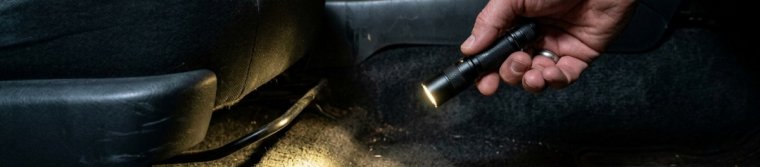
The FTC suggests looking for these signs.
- Mud or sand under the seats or under the dashboard.
- Rust around the doors.
- Carpet that is loose, stained or does not match the rest of the interior.
Look under the floor mats and inside the trunk as well.
Dirt and moisture often stay in low spots that a quick cleaning misses.
Brand-new carpet in an otherwise worn car is worth a question.
Ask the seller why it was replaced, and listen closely to the answer.
Step 2: Use your nose
Smell is one of the hardest flood signs to hide.
The FTC lists two warning odors.
- Mold or decay inside the car or in the trunk.
- A strong smell of cleaning products, which may be covering something else.
Close the doors and windows and sit inside for a few minutes.
Odors that are faint at first often get stronger in a closed car.
Run the heater and the air conditioning too, since smells can also come from the vents.
Step 3: Check the vehicle history
A car's records can reveal what a clean interior hides.
Start with the vehicle identification number, or VIN.
It is usually on the dashboard near the windshield and on the driver's door frame.
Make sure the number on the car matches the number on the paperwork.
NMVTIS reports
The FTC points buyers to VehicleHistory.gov.
That site belongs to the National Motor Vehicle Title Information System, known as NMVTIS.
The system is designed to protect consumers from fraud and unsafe vehicles.
According to the FTC, it gives information about a vehicle's title, its most recent odometer reading and its condition.
Read any note about salvage or flood damage carefully before you go further.
The NICB database
The National Insurance Crime Bureau, or NICB, offers a free database.
It shows whether a car was flood-damaged, stolen and not recovered, or declared salvaged.
There is an important limit to keep in mind.
It only shows that history if the car was insured when the damage happened.
A clean result is good news, but it is not a guarantee.
Paid reports
For a fee, other companies sell reports with more detail, such as accident and repair history.
The FTC does not endorse any specific service.
Any report is only as good as the data sent to it, so do not rely on one clue alone.
Step 4: Get an independent inspection
A trained mechanic can find damage that a buyer cannot see.
The FTC recommends having an independent mechanic inspect the car for water damage.
Choose a shop that you pick yourself, not one suggested by the seller.
Tell the mechanic that you are worried about flood damage, so they know what to look for.
Ask them to pay close attention to the electrical and mechanical systems.
If a seller will not allow an independent inspection, think hard before buying.
An inspection costs money, but far less than a car that fails a year after you buy it.
Step 5: Read the Buyers Guide and the contract
Dealers must post a Buyers Guide on the used cars they offer for sale.
The guide says whether the car comes with a warranty or is sold as is.
As is means you pay for any repairs after the sale.
For a car with any doubt about its past, that difference matters a lot.
Read every document before signing, and ask about anything you do not understand.
Keep copies of the Buyers Guide, the contract and any written promises.
The FTC's guide to buying a used car from a dealer explains the Buyers Guide in more detail.
Private sales and online listings
The same checks apply when you buy from a private seller.
In some ways, they matter even more.
A private seller will not post a Buyers Guide, and there is no dealer to go back to.
Meet in daylight, look at the car closely and run the history checks before any money changes hands.
Be wary of a seller who will not let you check the VIN or take the car for an inspection.
Warning signs at a glance
- Mud, sand or dirt under the seats or dashboard
- Rust around the doors
- Loose, stained or mismatched carpet
- A musty smell or a heavy smell of cleaning products
- A history report that mentions flood or salvage
- A price far below similar cars, especially after a big storm
- A seller who discourages inspections or history checks
What to do if you suspect fraud
Sometimes a dealer knowingly sells a storm-damaged or salvaged car as a good used car.
The FTC suggests three steps if you suspect that.
- Contact the NICB.
- Report it to the FTC at ReportFraud.ftc.gov.
- Tell your state attorney general.
Keep your documents, photos and notes from the purchase.
They help investigators and support any complaint you file.
A flood car can look shiny on the outside.
A flashlight, a VIN check and a mechanic's opinion are your best defense against an expensive surprise.
Sources and Further Reading
- Federal Trade Commission: How to steer clear of a flood-damaged car. Signs and smells of flood damage, history checks, independent inspection and where to report fraud.
- VehicleHistory.gov (NMVTIS). The federal title information system and how to get a vehicle history report.
- Federal Trade Commission: Buying a Used Car From a Dealer. The Buyers Guide, warranties and sales sold as is.
- ReportFraud.ftc.gov. Where to report a dealer you believe sold a damaged car dishonestly.