
Geysers, steaming pools and wild rivers draw millions of visitors to western parks every year.
They are some of the most memorable stops on any road trip.
They are also among the most dangerous places a visitor can walk.
The hazards are not always obvious, especially for people who have never seen a thermal area before.
This guide explains how to enjoy these places safely.
It is based on guidance from the National Park Service in Yellowstone, home to the largest collection of geysers in the park system.
Why thermal areas are so dangerous
The Yellowstone safety page is direct about the risk.
Burns from thermal features are a common cause of serious injury and death in the park.
The ground near a hot spring may look solid.
The NPS warns it can be just a thin crust with super-heated water below.
A single step off the path can break through that crust.
That is why the rules in these areas are strict, and why rangers enforce them.
Stay on the boardwalk, every time
The first rule is simple.
Always walk on boardwalks and designated trails in thermal areas.
The NPS also asks visitors to keep children close and not let them run on boardwalks.
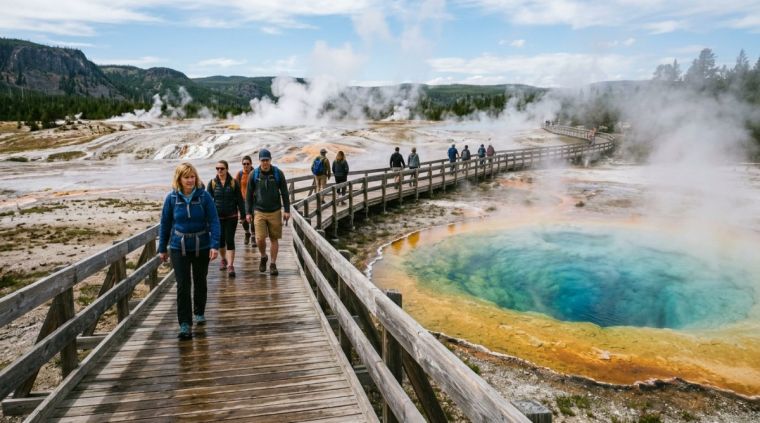
A few habits make this easier with a family.
- Hold small children's hands the whole time you are in a geyser basin.
- Talk with older kids about the rules before you leave the car.
- Keep phones and hats secure so you are never tempted to reach for a dropped item.
- If something falls off the boardwalk, leave it and tell a ranger.
The boardwalks often have the best views anyway.
They were built to bring visitors close to the features without putting them on fragile ground.
Do not touch thermal features or their runoff
Small streams of water often flow away from hot springs and geysers.
They can look like harmless creeks.
The NPS warns that even thermal runoff can be extremely hot and cause burns.
There is another reason to keep your hands out.
Hot springs contain algae, bacteria and fungi found nowhere else in the world.
The park explains that touching these life forms can destroy them.
Look closely, take photos and leave the water alone.
Swimming and soaking in hot springs is prohibited
Many travelers picture a relaxing soak in a natural hot spring.
In Yellowstone, that idea is both dangerous and illegal.
The NPS reports that more than 20 people have died from burns after entering or falling into the park's hot springs.
It is illegal there to swim or bathe in any water that is entirely of thermal origin.
Rules differ in other parks and on other public lands.
Always check the official rules for the place you are visiting before you get in any water.
Leave pets out of thermal areas
A dog on a leash can still slip or pull toward a steaming pool.
For that reason, the NPS does not allow pets in thermal areas or on boardwalks.
The rule applies even if the pet is on a leash or carried in arms, a stroller or a backpack.
The park explains that the policy exists to protect pets from being burned or killed in hot springs.
Trained service animals are allowed, and they must be leashed at all times.
If you travel with a pet, plan who will stay with it while others walk the boardwalk.
Never leave a pet alone in a parked car while you visit.
Our guide on road trips in hot weather explains how fast a car heats up.
If you feel sick, leave the area
Not every hazard in a geyser basin is hot water.
The NPS warns that toxic gases may build up to dangerous levels in some hydrothermal areas.
If you begin to feel sick while exploring a geyser basin, leave the area right away.
Walk back along the boardwalk to fresh air and rest before you continue.
Tell a ranger if the feeling does not pass quickly.
Plan your geyser basin visit
Popular thermal areas get crowded, and parking can fill early.
- Arrive early in the day for easier parking and quieter boardwalks.
- Wear comfortable shoes with good grip, since boardwalks can be wet from steam.
- Bring water and a light layer, as mornings near steam can feel cool and damp.
- Allow extra time, because park roads are slow and traffic often stops.
Our guide on driving through wildlife country explains why park drives take longer.
Rivers and streams: cold, fast and rising
Rivers can be as dangerous as hot springs, in a different way.
In Yellowstone, the NPS notes that few rivers or streams have bridges.
Many cannot be crossed until July or later.
Even in late summer, water levels can rise quickly after rainstorms.
Snowmelt in the high country on warm afternoons can raise them too.
The park warns the water can be cold, fast and more than thigh-deep.
Trying to ford deep, swift water has led to lost gear, injury and death.
How to decide on a stream crossing
Most road trippers stay on short trails and never need to ford a river.
If your hike does include a crossing, the NPS gives clear advice.
- Check your route on a topographic map for stream crossings before you start.
- Ask about river conditions at a ranger station before your hike.
- Do not be afraid to turn around if conditions look dangerous.
- Make sure everyone in your group is comfortable before anyone crosses.
A morning crossing may look easy and turn risky by afternoon on the way back.
Plan your timing so you are not forced to cross high water to get back to the car.
Cold water and hypothermia
Cold lake and river water is one of the causes of hypothermia the NPS lists.
A fall into a cold river can chill someone quickly, even on a warm day.
Bring dry clothes and a warm layer in the car for everyone.
Our guide to mountain road trips covers the warning signs of hypothermia and what to do.
Check each park's rules before you go
Thermal areas and rivers exist in many parks, and each has its own rules.
The NPS trip planning guide encourages visitors to research a park before they arrive.
Read the safety page for every park on your route.
Check current alerts for closed boardwalks, trails or river access.
Our guide to planning a national park road trip covers reservations and essentials.
A thermal area and river checklist
- Boardwalks and marked trails only, with children held close.
- No touching of thermal water or runoff.
- No swimming or soaking in thermal pools.
- Pets kept out of thermal areas and never left in the car.
- Leave a geyser basin at once if anyone feels sick.
- River conditions checked with a ranger before any crossing.
- Dry clothes and a warm layer kept in the car.
The bottom line
Geysers, hot springs and rivers are worth the drive.
Stay on the boardwalk, keep your hands and pets out of thermal water and leave if you feel unwell.
Treat cold, fast rivers with respect and turn around when in doubt.
Following these simple rules lets you enjoy the most amazing stops on your trip safely.
Sources and Further Reading
- National Park Service, Yellowstone National Park: Safety — supports the thermal area burn risk, the boardwalk rule, the warning about runoff and unique microbes, the ban on soaking and the deaths it cites, the pet and service animal rules, toxic gases, stream crossing guidance and cold-water hypothermia.
- National Park Service: Trip Planning Guide — supports researching each park's rules, alerts and conditions before your visit.